

Most people who are burnt out don’t call it that. They call it tired. Or stressed. Or just not quite themselves lately.
Burnout is more specific — and more serious — than general exhaustion. Understanding what it actually feels like from the inside is the first step toward doing something useful about it.
WHO classifies burnout in the ICD-11 formally recognised burnout in the ICD-11 as an occupational phenomenon in 2019, defining it as ‘a syndrome conceptualised as resulting from chronic workplace stress that has not been successfully managed.’ But the lived experience is harder to put in a definition.
What Burnout Feels Like — The Four Stages
Stage 1: The Warning Signs
At this stage, burnout is easy to miss because you’re still performing well. You might notice: you’re working harder but feeling less accomplished, you’re increasingly cynical about work that used to engage you, small tasks take longer than they should, and you’re starting to rely on caffeine, screens, or busyness to avoid sitting still.
Most people at Stage 1 tell themselves they just need a good night’s sleep, a holiday, or for a particular project to be over. Sometimes that’s true. Often, the pattern resumes exactly where it left off. At this stage, a short reset such as our Rest & Recharge sleep retreat can interrupt the pattern before it deepens.
Stage 2: Chronic Stress
Here the symptoms become harder to ignore. Physically: persistent headaches, disrupted sleep (too much or too little), jaw tension, digestive changes, getting sick more frequently. Emotionally: irritability that surprises you, difficulty feeling genuinely happy even when good things happen, a flatness that rest doesn’t lift.
Socially: withdrawing. Cancelling things. Finding connection effortful rather than energising. The American Psychological Association identifies social withdrawal as one of the clearest early markers of chronic stress transitioning toward burnout.
Stage 3: Exhaustion
Stage 3 is what most people picture when they think of burnout — but by the time they arrive here, they’ve usually been managing Stage 2 for months. The exhaustion is total: physical, emotional, cognitive. Decision-making becomes genuinely hard. Motivation to do even things you love is absent. You might find yourself crying without knowing why, or feeling nothing when you expected to feel something.
The body is also communicating clearly at this stage: the immune system is compromised, the nervous system is stuck in a state of low-grade alarm, and basic regulatory functions — sleep, appetite, focus — are unreliable.
Stage 4: Burnout
Clinical burnout is characterised by three markers: emotional exhaustion, depersonalisation (a detachment from your work and relationships), and reduced sense of personal accomplishment. Mental Health UK’s 2024 Burnout Report found in 2024 that one in five UK adults took time off work due to poor mental health — with burnout among the leading causes. At this stage, willpower is not a useful tool. The tank is genuinely empty.
High-Functioning Burnout — The Pattern Most Common at Bodhi Leaf
The guests who come to us most often are not at Stage 4. They’re at Stage 2 or Stage 3 — still performing, still meeting their obligations, but running on something other than genuine energy. Adrenaline. Habit. The inability to imagine stopping.
High-functioning burnout is particularly hard to identify because it doesn’t look like burnout from the outside. You’re still showing up. The work is still getting done. But internally: the tank has been running on fumes for longer than you’d admit, the things that used to make you feel alive have gone quiet, and the gap between who you appear to be and how you actually feel is growing.
This is the person who genuinely doesn’t know if they ‘deserve’ a retreat because they haven’t collapsed. You don’t need to have collapsed. The pattern you’re describing is exactly what a healing retreat is designed for.
Burnout vs. Depression — An Important Distinction
Burnout and depression share overlapping symptoms, and one can develop into the other. The key difference is context: burnout is primarily situational and work-related, while depression is more pervasive and less linked to a specific environment.
If you remove the stressor (the job, the pressure), burnout symptoms typically begin to lift. Depression doesn’t work that way. If you’re unsure which you’re experiencing, speaking to a mental health professional before booking a retreat is the right call. A retreat is not a clinical treatment for depression.
Physical Signs That Are Often Missed
Burnout isn’t only emotional. The body keeps score, as the phrase goes, and the physical symptoms of chronic stress are often the clearest signal something needs to change:
- Persistent muscle tension — especially the jaw, neck, and shoulders
- Disrupted sleep: difficulty falling asleep, waking at 3am, sleeping too much
- Digestive issues — the gut-brain connection is highly sensitive to chronic stress
- Frequent minor illness — colds, infections, slow recovery
- Reduced tolerance to noise, light, or stimulation
- The sense of bracing — as though your body is always slightly tensed
This last one is particularly significant. Harvard Health on chronic stress explains that the body’s stress response, when chronically activated, produces physiological changes that are measurable and cumulative. The nervous system doesn’t distinguish between work stress and physical threat — it just stays on high alert. Here’s why rest alone doesn’t switch that alarm off.
When Is It Time to Do Something?
The most common answer people give themselves: ‘when this project is over,’ ‘once the kids are older,’ ‘after the next quarter.’ These are postponements, not plans.
The clearest signal that it’s time: when rest stops restoring you. When a good night’s sleep doesn’t make you feel better. When a week off doesn’t produce the relief it used to. When the recovery periods are getting shorter and the depletion is getting faster.
That pattern has a name — and there is a specific, well-documented approach to addressing it. Our existing article on How to Heal Burnout: A Nervous System Approach covers the nervous system approach to burnout healing in detail.
What Actually Helps
Not everything marketed as a burnout solution works equally well. Here is what the evidence and experience points toward:
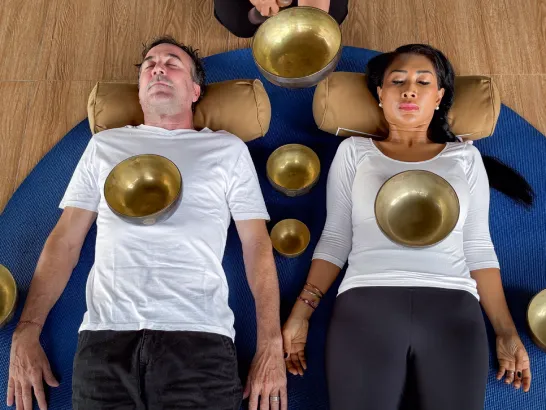
- Nervous system regulation — not just relaxation, but specific practices (breathwork, somatic movement, sound healing) that actively retrain the stress response. See our Feeling Stuck in Fight-or-Flight.
- Sustained removal from the stressor — a weekend isn’t long enough for a depleted nervous system to genuinely shift
- Nourishment — sleep, real food, time in nature, care that’s consistent rather than transactional
- Reduced stimulation — less decision-making, less input, less performance
- Integration — tools and practices that continue working after the recovery period ends
This is the structure behind our Nervous System Reset Retreat, which was specifically designed for people at Stage 2 and Stage 3 of burnout. It addresses the nervous system directly rather than treating symptoms.
Frequently Asked Questions
How do I know if what I’m experiencing is burnout or just normal tiredness?
The key distinction is duration and restoration. Normal tiredness responds to rest — you sleep, you feel better. Burnout doesn’t respond to rest in the same way. If you’ve had good sleep, a holiday, a break — and still feel the flatness, the depletion, the sense of going through the motions — that’s a signal worth taking seriously.
Can burnout happen even if I love my job?
Yes. Burnout is about chronic overextension, not dissatisfaction. People in high-purpose careers — nurses, teachers, founders, caregivers — are among the most at-risk because the internal motivation makes it harder to stop. Loving what you do doesn’t protect you from what too much of it does to your nervous system.
Is burnout a mental health condition?
The WHO classifies burnout as an occupational phenomenon rather than a medical condition — but acknowledges it produces real, measurable impacts on mental and physical health. It’s distinct from depression and anxiety, though it can develop into either. If you’re concerned about the severity of your symptoms, speaking to a GP or mental health professional alongside considering a retreat is appropriate. NHS guidance on burnout has guidance on when to seek professional support.
How long does burnout take to develop?
Burnout typically builds over months or years rather than weeks. The early stages are easy to ignore because performance hasn’t yet been affected. By the time most people recognise they’re burnt out, they’ve usually been in the warning stages for six months to two years.
What’s the fastest way to recover from burnout?
The honest answer is that there’s no fast recovery from significant burnout. Mild burnout can respond within weeks to intentional rest and boundary changes. Moderate burnout typically takes three to six months. What a retreat provides is not speed — it’s depth. A structured program can compress what might take months of solo recovery into a meaningful starting point with tools that continue working after you leave.
Can I come to Bodhi Leaf if I’m not sure I’m burnt out?
Yes. ‘I’m not sure’ is a common and honest starting point. A free consultation is a good way to talk through where you are and whether a retreat is the right fit. We don’t require a diagnosis — we start with where you actually are.
Think this might be what you’re experiencing?A short conversation can help clarify what kind of support you actually need. |