

If you’ve been told to rest more, or take a break, or reduce your stress — and you’ve tried that, and it hasn’t worked — this article is about why.
The nervous system is the missing piece in most conversations about mental health and burnout. Understanding it doesn’t require a biology degree. But it does change what you reach for when something is wrong. If you’re still working out whether this is burnout, start with what burnout actually feels like from the inside.
- What the Nervous System Actually Does
- Polyvagal Theory — The Framework That Changed Everything
- What Chronic Stress Does to the Nervous System
- Why Rest Alone Doesn’t Resolve Nervous System Dysregulation
- What Actually Helps — The Evidence Base
- The Difference Between Relaxation and Regulation
- When to Seek Clinical Support Alongside
- Frequently Asked Questions
What the Nervous System Actually Does
The autonomic nervous system governs the involuntary processes that keep you alive: heart rate, breathing, digestion, immune function, and — crucially — your body’s response to threat. The National Institutes of Health on the autonomic nervous system describes it as having two primary branches: the sympathetic (responsible for the stress response) and the parasympathetic (responsible for rest and recovery).
In a healthy, regulated nervous system, these two branches function like a see-saw: stress activates the sympathetic system, the stressor passes, and the parasympathetic system restores equilibrium. You feel stressed, and then you don’t.
Chronic stress breaks this mechanism. When the nervous system is in a state of sustained activation — when there is no clear ‘threat has passed’ signal — it stops oscillating and gets stuck. The see-saw locks.
Polyvagal Theory — The Framework That Changed Everything
Dr. Stephen Porges’ Polyvagal Theory (Dr. Stephen Porges) proposed that the autonomic nervous system has not two but three primary states: safe and social (connected, open, curious), fight-or-flight (mobilised, reactive, hypervigilant), and freeze or shutdown (collapsed, disconnected, numb).
These states are not chosen. They are automatic, physiological responses to the perceived level of safety in the environment. The nervous system is constantly scanning for cues of safety or threat — a process Porges calls ‘neuroception’ — and adjusting your state accordingly, below the level of conscious awareness.
This is why you can know logically that the email can wait until morning, and still feel your heart rate spike when you hear the notification. Knowledge doesn’t change the state. The nervous system responds to signals it reads as threat, regardless of what your prefrontal cortex thinks about it.
What Chronic Stress Does to the Nervous System
When the stress response is chronically activated — over months and years rather than minutes — the effects are measurable. Harvard Health on chronic stress documents how prolonged cortisol elevation disrupts sleep, impairs immune function, affects cardiovascular health, and compromises cognitive performance.
But the less-discussed effect is what it does to the nervous system’s baseline. A dysregulated nervous system — one that has been in fight-or-flight for an extended period — literally recalibrates. The threat threshold lowers. Minor stressors produce major responses. Recovery between stressors shortens.
This is why people with burnout often describe feeling ‘braced’ even when nothing is actively wrong. The nervous system learned that threat is always coming. It stays ready.
Why Rest Alone Doesn’t Resolve Nervous System Dysregulation
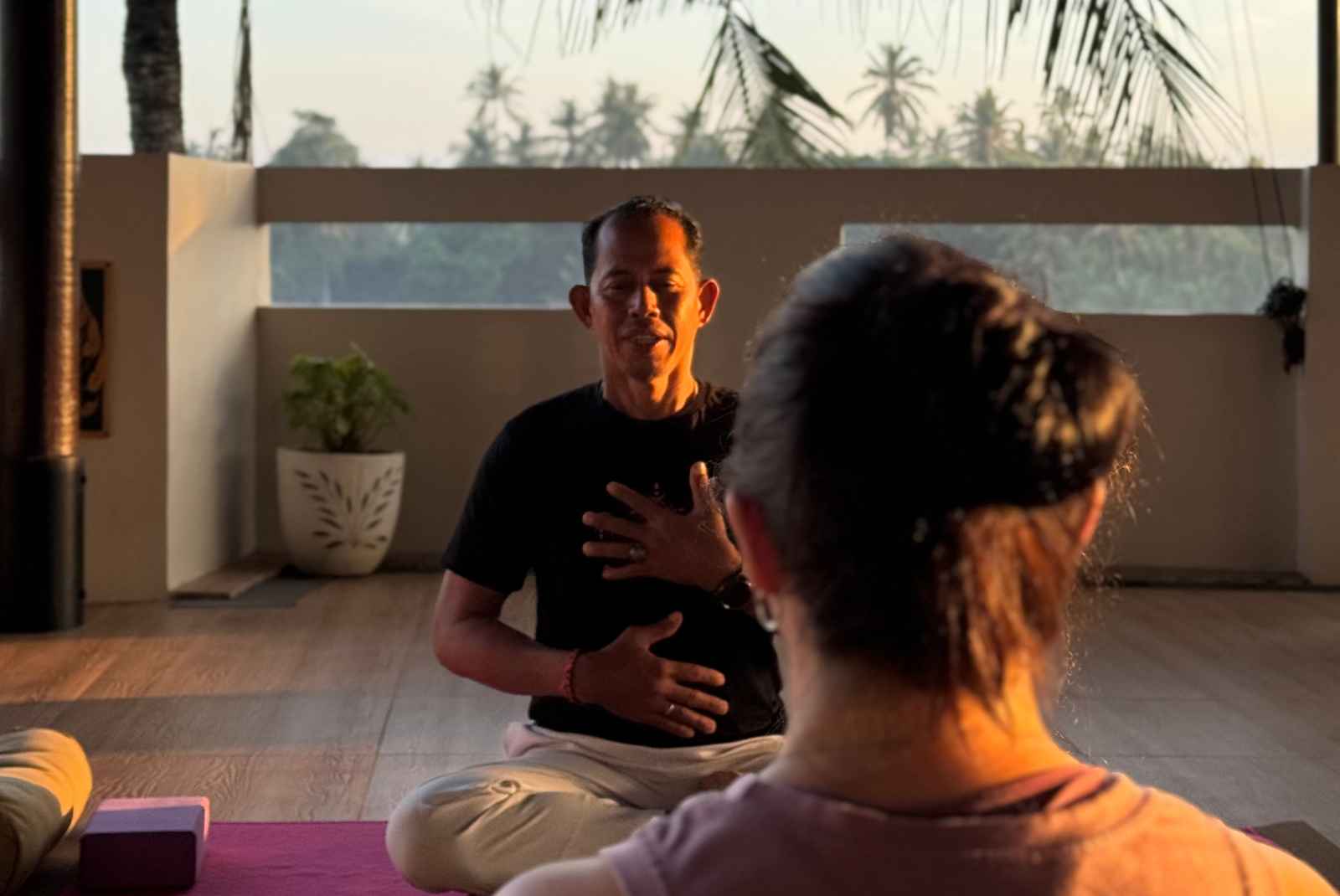
If the nervous system has been chronically activated, rest alone doesn’t reset it — any more than telling a car alarm to stop will deactivate it without the right key.
Rest reduces input, which helps at the surface level. But a dysregulated nervous system will typically remain dysregulated during rest, producing the characteristic experience of burnout: lying in bed but not sleeping, taking a holiday but not recovering, having evenings off but not unwinding. If disrupted sleep is where this shows up most for you, our Rest & Recharge sleep retreat is built around restoring it.
What the nervous system needs to genuinely reset is not absence of stimulation alone — it’s active evidence of safety. The parasympathetic system is activated by specific inputs: certain breathing patterns, slow movement, the felt experience of being held and supported, consistent rhythm, time in nature, and the absence of threat cues.
This is not metaphorical. These are physiological inputs that directly activate the vagus nerve — the primary channel through which the parasympathetic system operates.
What Actually Helps — The Evidence Base
Breathwork
Slow, diaphragmatic breathing directly stimulates the vagus nerve and shifts the nervous system toward parasympathetic activation. This is measurable in heart rate variability data. Extended exhale breathing (exhale longer than inhale) is particularly effective. Specific patterns — box breathing, coherence breathing — have documented effects on stress response regulation.
Somatic movement
Yoga, gentle movement, and somatic practices work with the body rather than the mind to complete stress cycles and discharge held tension. Psychology Today on somatic therapy identifies somatic therapy as increasingly evidenced for trauma and nervous system dysregulation — precisely because it bypasses the cognitive barrier that talking therapies can’t always cross.
Sound healing
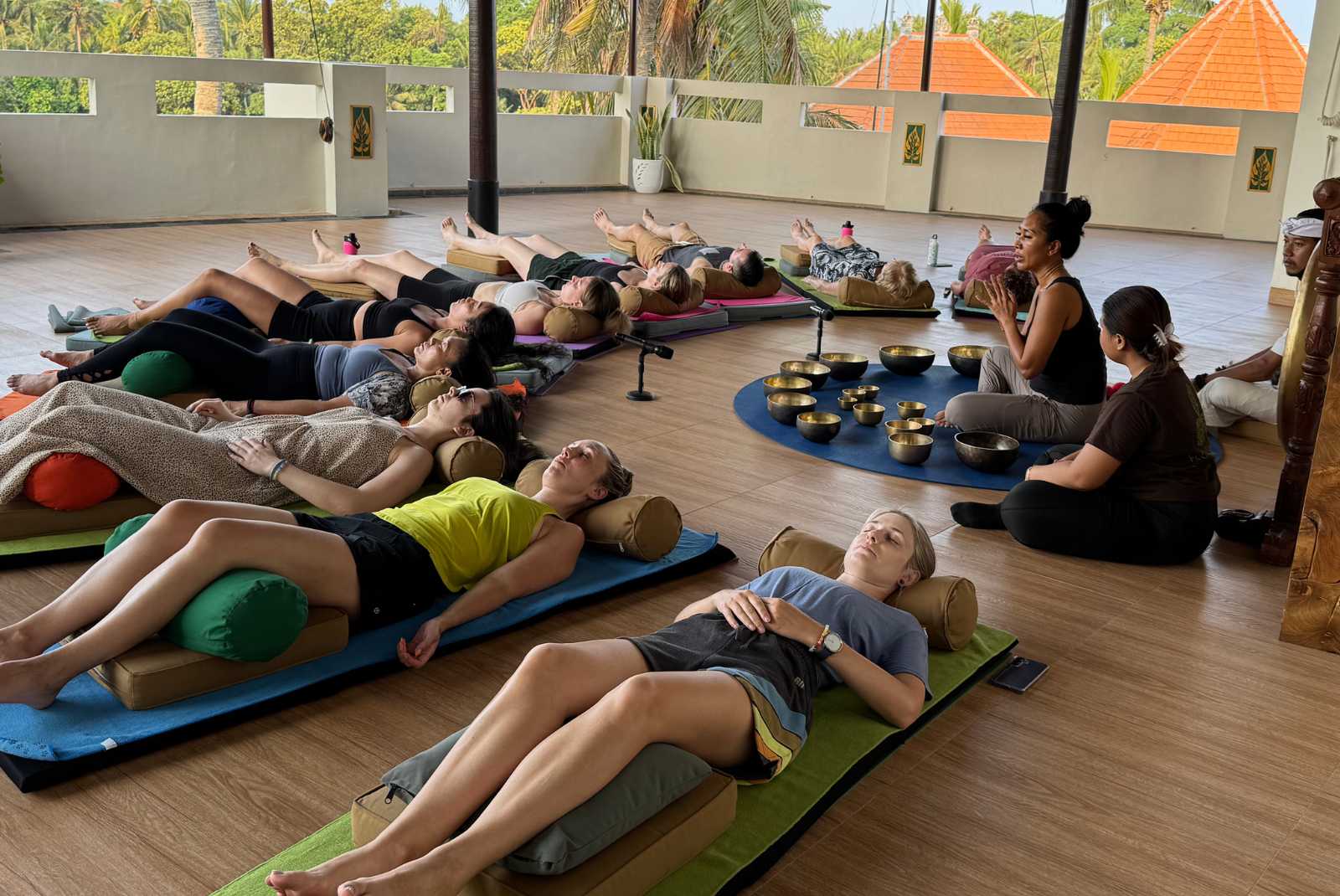
Certain sound frequencies have documented effects on the autonomic nervous system. Sound baths using singing bowls and other instruments produce measurable shifts in brainwave state — from beta (active, alert) toward alpha and theta (relaxed, integrative). This is one of the reasons sound healing is particularly effective for people whose thinking mind is the part that won’t quiet down.
Nature immersion
The evidence for what Japanese researchers call ‘shinrin-yoku’ (forest bathing) is now substantial. Time in natural environments produces measurable reductions in cortisol, blood pressure, and sympathetic nervous system activity. The specific sensory inputs of nature — dappled light, birdsong, irregular natural sounds — appear to be read by the neuroception system as safety cues. WHO global mental health statistics lists access to green space and nature as a protective factor for mental health.
Consistent rhythm and predictability
A dysregulated nervous system is hypervigilant to unpredictability — because uncertainty is read as potential threat. Consistent daily structure, predictable meals, and a known schedule actively reduce the nervous system’s load. This is one of the least-discussed but most effective features of a structured retreat: the schedule does the work, so the nervous system doesn’t have to stay ready for what might happen next. It’s also why our Silent Meditation Retreat removes devices and decisions for four full days.
Safety in relationship
Porges’ research identifies co-regulation — the effect of being in the presence of a calm, attuned other person — as one of the most powerful inputs for nervous system regulation. This is why the quality of the team at a retreat matters. A team that is genuinely calm and attuned, that knows how to read a guest’s state and respond accordingly, directly supports the nervous system through the relationship.
The Difference Between Relaxation and Regulation
Relaxation is a temporary state — you feel calm, and then the next stressor arrives and you’re activated again. Regulation is a lasting change in baseline — the nervous system’s default returns to a lower level of activation, and recovery from stress becomes faster.
This is the distinction that explains why a massage feels wonderful and is gone by the time you’re home, while a week in a structured program can produce effects that last months. The massage produces relaxation. The program produces regulation.
Our Nervous System Reset Retreat is designed specifically around nervous system regulation — not just rest. Each element of the program (the breathwork, the somatic sessions, the sound healing, the meals, the rhythm) is sequenced to produce physiological change, not just pleasant experience.
When to Seek Clinical Support Alongside
This article is educational, not clinical advice. Nervous system dysregulation exists on a spectrum, and at the more severe end — active panic disorder, complex PTSD, severe depression — clinical support is necessary rather than optional.
A healing retreat can work alongside therapy or medication, but it doesn’t replace clinical treatment for clinical conditions. If you’re unsure where you fall on the spectrum, speak to a GP or mental health professional as well as exploring what a retreat might offer.
Frequently Asked Questions
What is nervous system dysregulation?
Nervous system dysregulation refers to a state in which the autonomic nervous system’s capacity to move flexibly between activation and rest has been impaired — typically by chronic stress, trauma, or prolonged overextension. It shows up as: difficulty settling or sleeping even when tired, an exaggerated response to minor stressors, emotional flatness or volatility, persistent physical tension, and slow recovery after stress.
Is nervous system dysregulation the same as anxiety?
They overlap, but aren’t identical. Anxiety is a psychological and physiological experience with specific features (worry, avoidance, physical symptoms). Dysregulation is a broader term describing the nervous system’s reduced capacity to regulate itself. Anxiety is often a symptom of an underlying dysregulated nervous system — and addressing the nervous system can reduce anxiety as a downstream effect, even without directly targeting the anxiety itself.
Can you regulate your nervous system on your own?
Yes — to a degree. Daily practices (breathwork, yoga, cold exposure, time in nature) help maintain a regulated baseline. But a severely dysregulated nervous system is difficult to regulate alone because it’s the regulatory capacity itself that’s impaired. This is analogous to using willpower to manage exhaustion — the tool you’re trying to use is the tool that’s broken. An external container — a structured program in a safe environment with a skilled team — often achieves in days what solo practice takes months to approach.
How long does it take to regulate the nervous system?
In a well-designed retreat environment, most guests notice meaningful shift within two to four days. Full recalibration to a new baseline takes four to twelve weeks of consistent practice after the program ends. Our existing article on How to Heal Burnout: A Nervous System Approach covers recovery timelines in detail. For a stage-by-stage timeline, see how long burnout recovery actually takes.
Is polyvagal theory evidence-based?
Polyvagal theory is widely used in trauma-informed therapeutic practice and has a growing evidence base, though it remains an evolving framework. The core insight — that the autonomic nervous system has a hierarchy of response states and that safety is a prerequisite for healing — is well-supported by both neuroscience and clinical experience. Its application in somatic therapies, EMDR, and trauma-informed yoga continues to accumulate research support.
What’s the best way to start regulating my nervous system today?
The most immediately accessible tool is breathing. Specifically: slow your exhale so it’s longer than your inhale (try 4 counts in, 6-8 counts out) and do this for five minutes. This directly stimulates the vagus nerve and produces measurable parasympathetic activation. It’s not the whole answer — but it’s a real starting point that costs nothing and works the first time you try it.
Want to experience regulation rather than just read about it?
|