

| Burnout level | First noticeable improvement | Full recovery | Retreat that fits |
|---|---|---|---|
| Mild | 2 to 6 weeks | 1 to 3 months | Rest & Recharge (3 nights) |
| Moderate | 4 to 12 weeks | 3 to 6 months | Nervous System Reset (4 nights) |
| Severe | Several months, with professional support | 6 to 18 months | 5 Nights Transformational or Path to Happiness (6 nights) |
Most people recover from burnout in about 1 to 3 months when it’s mild, 3 to 6 months when it’s moderate, and 6 to 18 months when it’s severe. You’ll usually notice the first improvement much sooner: within 2 to 6 weeks for mild burnout and 4 to 12 weeks for moderate burnout. During a retreat, many guests feel a shift by day two or three.
Burnout recovery has a timeline. Not a fixed one — it depends on how long you’ve been depleted, how severe the burnout is, and what conditions you create for recovery. But it’s not infinite, and it follows a broadly predictable pattern.
Understanding the timeline is important because one of the most common mistakes people make is expecting too much too soon — and interpreting slow progress as failure. This article sets honest expectations and explains how a healing retreat fits into the recovery arc.
WHO classifies burnout in the ICD-11 classification of burnout distinguishes it from depression and describes it as a syndrome specifically tied to chronic unmanaged workplace stress. The recovery path is different from depression recovery, and worth understanding on its own terms. Not sure which stage you’re in? The four stages of burnout can help you place yourself.
Mild Burnout: 1–3 Months
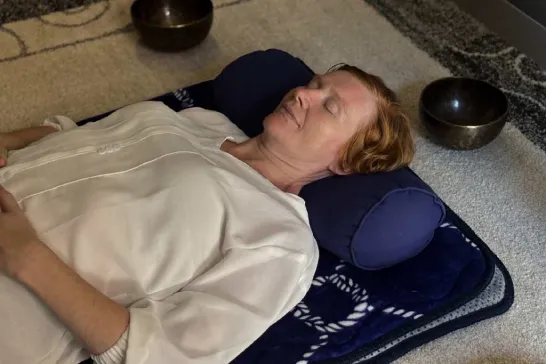
Mild burnout typically looks like: persistent fatigue that’s noticeable but not incapacitating, motivation that dips rather than disappears, irritability and a shorter fuse, reduced ability to be present. You’re still functioning. You’re aware something’s off.
At this stage, intentional rest plus meaningful boundary changes usually bring a full recovery within one to three months, and many people feel noticeably better within the first few weeks. The nervous system hasn’t been chronically activated for long enough to have deeply ingrained stress patterns.
A retreat at this stage is preventative as well as restorative. Our Rest and Recharge Package is well-suited here — a structured pause that interrupts the pattern before it becomes entrenched, with tools to maintain the reset after you leave.
Moderate Burnout: 3–6 Months
Moderate burnout involves sustained disruption to daily functioning: sleep problems, emotional flatness, difficulty concentrating, social withdrawal, physical symptoms (frequent illness, chronic tension, digestive changes). At this stage, the nervous system has been in a chronic stress response for long enough that simple rest doesn’t produce recovery the way it used to. Full recovery from moderate burnout usually takes three to six months, with the first real improvement often arriving within four to twelve weeks.
Recovery at this level requires more than time off. It requires specific, targeted intervention with the stress response itself — and an environment that removes the triggering conditions while actively working on the nervous system.
A retreat of at least four nights is the minimum meaningful intervention at this level. Our Nervous System Reset Retreat is designed specifically for moderate burnout — the program is sequenced to address the physiological stress response, not just the emotional experience. Guests at this level typically notice meaningful shift by day three, with integration continuing for weeks after they leave.
What to expect after leaving: the first week back tends to feel tender. Protecting the recovery is as important as the retreat itself — returning straight into full intensity is the most common way to undo the work. We discuss this explicitly in the program.
Severe Burnout: 6–18 Months
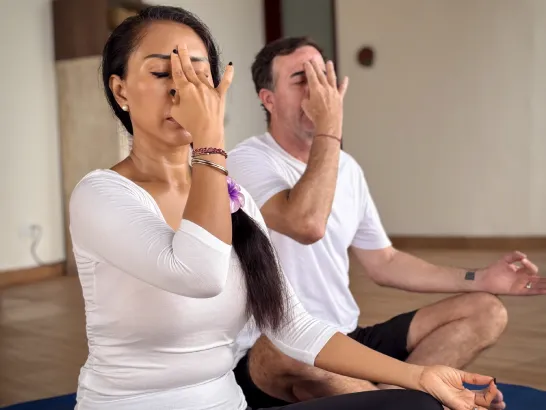
Severe burnout — the stage where functioning is genuinely compromised, emotional numbness is persistent, and the body is sending consistent distress signals — has a longer recovery arc. Six to eighteen months is a realistic window, and some people take longer.
At this level, a retreat is one component of a longer recovery plan rather than a standalone solution. What a retreat provides in severe burnout: the foundational reset that gives the nervous system a genuine starting point, tools that continue working after the program ends, and clarity about what needs to change in the life being returned to.
It doesn’t replace: clinical support if mental health conditions are present, sustained lifestyle and environment changes, ongoing nervous system practices. Our article on How to Heal Burnout: A Nervous System Approach covers the nervous system approach to recovery in more detail.
For guests arriving in severe burnout, we recommend our longer programs, such as the 5 Nights Transformational Private Healing Retreat or the six-night Path to Happiness Retreat and a free consultation before booking — not to screen you out, but to make sure the program is designed for where you actually are.
What the Recovery Arc Actually Feels Like
Phase 1: Decompression (Days 1–3 of a retreat, or weeks 1–2 of home recovery)
The body needs time to register that the pressure is genuinely off. Many people feel strange or flat during this phase — sometimes worse before better. This isn’t failure; it’s the nervous system finally exhaling. During a retreat, we hold this phase with no agenda on day one, and gentle rather than intensive practices in early days.
Phase 2: Regulation (Days 3–5 of a retreat, or weeks 3–6 of recovery)
Sleep begins to improve. Appetite stabilises. The reactive edge starts to soften. This is when most guests report the clearest experience of shift — when the body starts to remember what safety feels like. Here’s why rest alone isn’t enough for a stressed nervous system, and what actually shifts it.
Phase 3: Integration (Post-retreat, weeks 2–8)
The full benefit of a retreat often arrives two to four weeks after returning home. The nervous system has been given new reference points, and the practices embedded during the program start producing effects in daily life. This phase is fragile — it requires protection, continued practice, and avoiding the immediate return to full intensity.
Phase 4: New baseline (Months 2–6 post-retreat)
With consistent practice and environment changes, a new nervous system baseline becomes established. The old reactivity patterns are still possible — stress is still stress — but the recovery speed improves, and the tools work faster.
What Speeds Up Recovery
- Removing or significantly reducing the stressor (where possible)
- Consistent nervous system practices — breathwork, yoga, somatic movement. See our Feeling Stuck in Fight-or-Flight for how these work physiologically.
- Nourishing sleep — quantity and quality both matter
- Time in nature — the evidence base for this is stronger than most people realise
- Reduced stimulation — less input, fewer decisions, less performance. Harvard Health on chronic stress documents how chronic overstimulation maintains the stress response.
- Community and genuine connection — not performance, but being seen without having to manage how you appear
What Slows Recovery
- Returning immediately to full intensity after a break
- Using alcohol or substances to manage the depletion (temporarily effective, counterproductive over time)
- Treating symptoms (tiredness, irritability, flatness) without addressing the underlying nervous system state
- Expecting recovery to be linear — it isn’t, and the dips don’t mean it isn’t working
- Going too short on the retreat and not having enough time for Phase 1 to complete
Frequently Asked Questions
Will one retreat fix my burnout?
For mild burnout, a retreat can produce a significant and lasting reset. For moderate to severe burnout, a retreat is a meaningful intervention but not a complete solution — it gives you the foundation and tools, and the recovery continues at home. Think of it as compressing several months of solo recovery into a more effective starting point, rather than a one-time cure.
How long before I start feeling better?
During a retreat, most guests notice something shift by day two or three, often quietly, through better sleep or a softening of the internal noise. At home, the first noticeable improvement usually comes within two to six weeks for mild burnout and four to twelve weeks for moderate burnout. Severe burnout takes longer, and professional support is recommended alongside lifestyle changes. Feeling better is not the same as full recovery: full recovery takes about one to three months for mild, three to six months for moderate and six to eighteen months for severe burnout.
Can I go back to full capacity after recovering from burnout?
Yes — and many people find their recovered capacity is actually deeper because they understand their limits better and have tools they didn’t have before. The goal is not a lower ceiling but a more sustainable way of operating.
Is it possible to recover from burnout without time off?
For mild burnout with clear boundaries implemented, yes. For moderate to severe burnout, research consistently shows that significant time off — not just evenings and weekends, but extended removal from the stressor — is necessary for genuine recovery. The nervous system cannot recover in the same environment that created the depletion.
What’s the risk of not addressing burnout?
Left unaddressed, burnout progresses. Research indicates that prolonged burnout increases the risk of anxiety disorders, depression, cardiovascular disease, and immune dysfunction. WHO global mental health statistics identifies chronic stress as a significant contributor to the global mental health burden. The earlier intervention happens, the shorter and more complete the recovery.
Not sure where you are on this spectrum?A free consultation helps us understand where you are and what might actually help. |