
Key takeaways
- A stressed nervous system can stay on alert even when you rest.
- A reset retreat helps the body settle through gentle movement, breath, sound, touch, good food and calm surroundings.
- Our Nervous System Reset Retreat is 4 nights and 5 days, with trauma-informed guidance and short, guided phone-free windows.
- It is a wellness retreat, not a medical treatment, and results vary.
You slept eight hours and still woke up tired. You took the weekend off, and Monday felt exactly the same. You lie down to rest, but your mind keeps scanning for the next thing to do.
If your body seems stuck on “alert” no matter how much you rest, you are not lazy, and you are not doing it wrong. Your nervous system may simply need a different kind of help.
That is the idea behind our Nervous System Reset Retreat, which supports nervous system regulation: your body’s ability to move between stress and calm. Here is what that means in plain terms, and how a few days in Bali can help.
- What Is Nervous System Regulation?
- How Does Chronic Stress Show Up in My Body?
- What Happens on a Nervous System Reset Retreat?
- Why Is Rest Alone Not Enough?
- What Can I Take Home After a Reset?
- How Is This Different From a Holiday or Therapy?
- Should I Choose a Private or a Group Reset?
- Who Is a Nervous System Reset For?
- Frequently Asked Questions
- How do I know if my nervous system needs a reset?
- Will I feel better after only five days?
- Do I have to give up my phone for the whole retreat?
- Do I have to do the fasting detox?
- I have never done yoga or meditation. Is that okay?
- Can I join with a partner or friend?
- Is there anything I cannot take part in?
- Is this a replacement for therapy or medication?
What Is Nervous System Regulation?
Your nervous system has two main gears. One is the stress gear, often called fight or flight. The other is the rest gear, sometimes called rest and digest. Regulation is the ability to move between them: to rise to a challenge, then come back down once it has passed.
The stress gear is useful. It sharpens your focus before a deadline and gets you out of the way of a speeding car. The problem starts when it never switches off. Harvard Health explains that repeated activation of the stress response takes a toll on the body over time, and that the relaxation response is its natural counterbalance.
Long stretches of pressure can leave you humming in the stress gear, scanning for the next demand even when nothing is wrong. You feel wired, flat, jumpy or foggy. Ordinary rest does not switch it off, because the body has not yet learned that it is safe to stand down.
We wrote about this in the nervous system and mental health: why rest is not enough. The short version: the body often needs to be shown it is safe, not just left alone.
How Does Chronic Stress Show Up in My Body?
Chronic stress rarely announces itself. It tends to show up as small things that add up:
- Feeling wired but tired, especially in the evening.
- Poor sleep, or sleep that does not refresh you.
- Irritability and a shorter fuse than usual.
- Tight shoulders, a clenched jaw or shallow breathing.
- Trouble concentrating, or reading the same paragraph three times.
- Startling easily, or feeling on edge in quiet moments.
- Needing your phone constantly, and feeling restless without it.
None of these prove anything on their own, and only a health professional can assess you. But if several sound familiar, your system may be running on empty.
When this kind of stress comes from work and lasts a long time, it often becomes burnout. The World Health Organization describes burnout as the result of chronic workplace stress that has not been successfully managed, marked by exhaustion, mental distance from work and a drop in effectiveness. We cover this in our burnout recovery guide.
What Happens on a Nervous System Reset Retreat?
Our Nervous System Reset Retreat is a 4-night, 5-day stay built around calming the body first. The guidance is trauma-informed, which means the pace is gentle, nothing is forced, and you are always in control of how far you go.
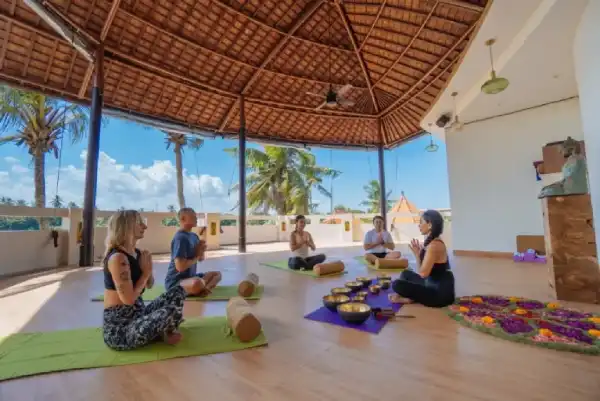
Each day mixes slow practices, Balinese ritual, bodywork and plenty of open time. Across the stay, you can expect:
- Gentle movement: Yin Yoga and Yoga Nidra, two of the slowest and most restful forms of yoga.
- Breath: a breathwork session, plus breathing woven into the morning yoga.
- Stillness: a guided meditation with a meditation master or Buddhist monk, and quiet time for journaling.
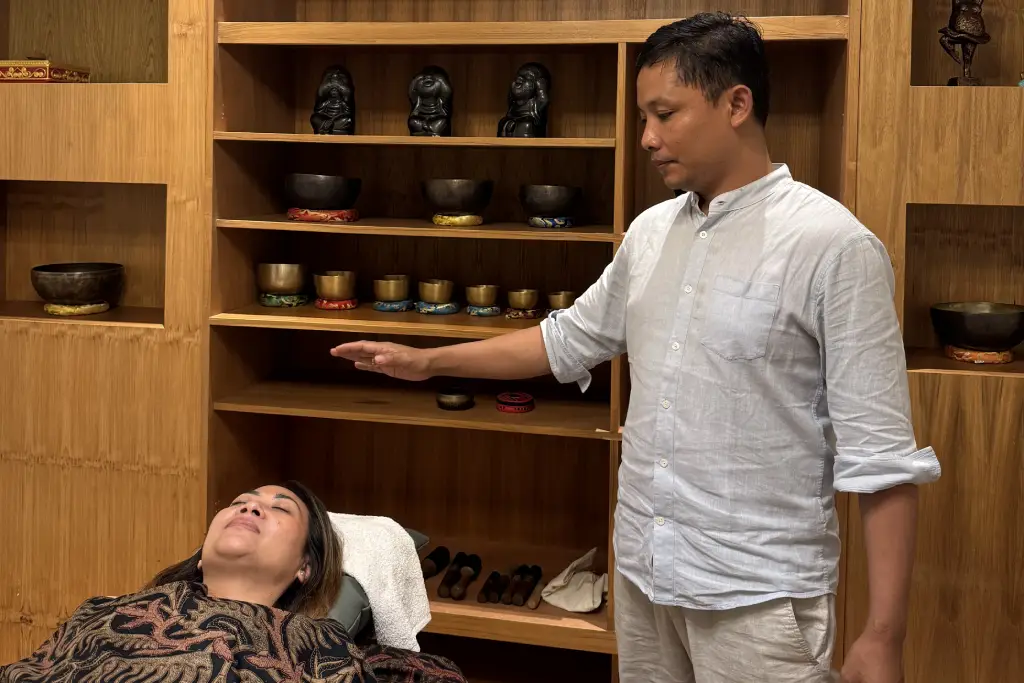
- Sound: Chakra Balancing and Nadi Cleansing with Tibetan sound healing.
- Nature: mindful walks at Sudamala Rice Field and Purnama Beach.
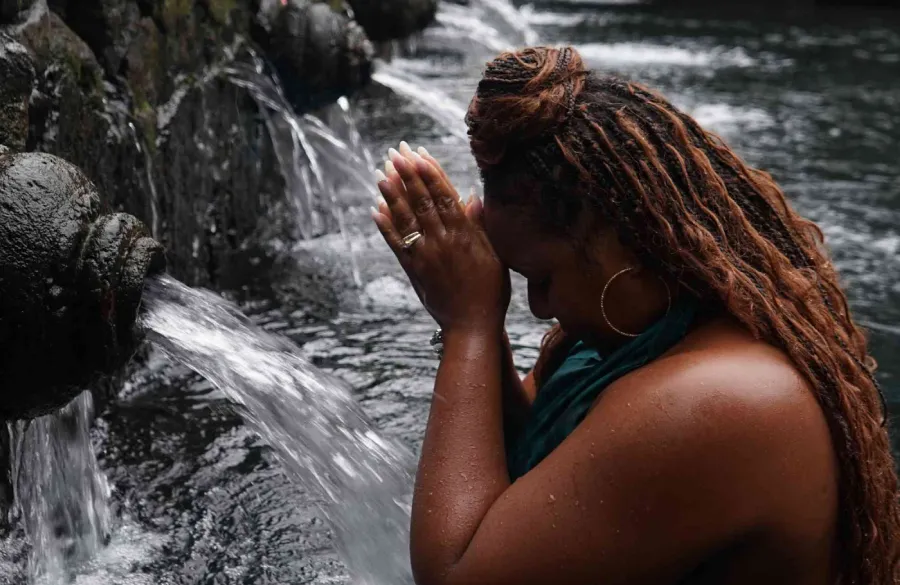
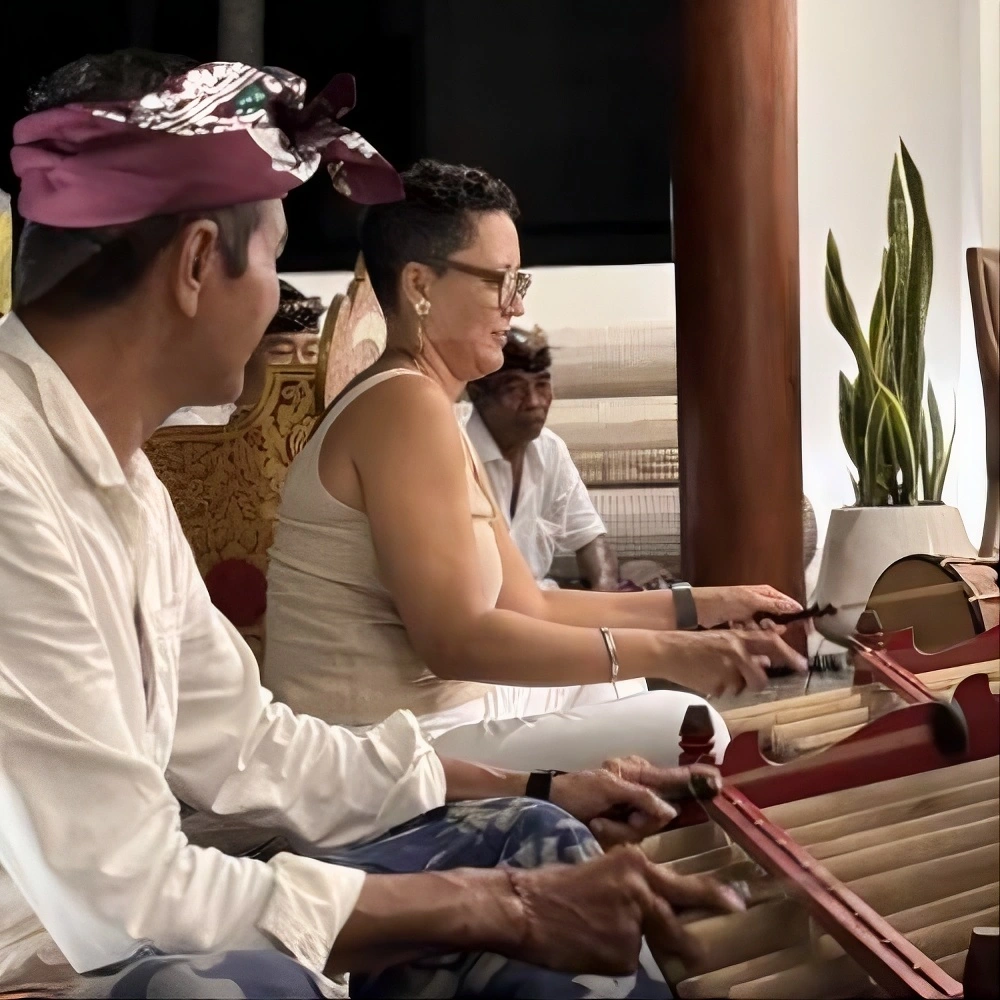
- Balinese culture: an offering making class, a purification ceremony at a sacred water temple, a music circle with a traditional Balinese musician, and a Sukawati heritage walk through the village temple and market.
- Touch: Balinese aromatherapy, a hot stone massage, a deep tissue massage and a regeneration facial.
- Food: organic wellness cuisine at every meal, or an optional fasting detox with green and healing juices and elixirs.
There is one more element many guests value most. On Days 2, 3 and 4, the retreat includes three guided, phone-free windows of four hours each. They are timed around yoga, temple visits and evening reflection. Outside those windows, you can stay in touch with home or work. The goal is not to cut you off. It is to show your body what a few hours without constant input feels like, so you can repeat it at home.
What do guests remember most? In reviews on TripAdvisor, past visitors to The Bodhi Leaf often mention the Tibetan bowl sound bath, the temple purification and the massages, and describe leaving more relaxed than they arrived. Those same elements sit at the center of the Nervous System Reset Retreat.
Why Is Rest Alone Not Enough?
Rest removes demands. A reset adds something. That something is a set of signals that tell the body it can stand down: slow movement, warm touch, steady sound, nourishing food, natural light and a place that feels safe.
Breathing is a good example. A Stanford Medicine study found that just five minutes a day of breathing with long, slow exhales improved mood and reduced anxiety, and the effect grew the more days people practised. Long exhales activate the body’s natural brake, the parasympathetic nervous system.
On a reset retreat, you practise this kind of signal every day, with guidance, in a setting that supports it. Many guests describe the result as the difference between stopping and actually settling.
What Can I Take Home After a Reset?
A few calm days are wonderful, but the real test is what happens when you land back in ordinary life. That is why the retreat focuses on practices you can repeat, not just experiences you enjoy once.
By the end of the stay, you can leave with a short toolkit like this:
- A breathing practice. A few minutes of slow breathing with long exhales, done once or twice a day, or whenever stress spikes.
- A phone-free window. One protected block of time each day, inspired by the guided windows you practised on the retreat.
- A gentle movement habit. A short Yin or restorative sequence before bed, or a slow walk without headphones.
- A wind-down ritual. Journaling, a warm shower or a few minutes of quiet before sleep, so your body learns that evening means rest.
None of these are complicated. That is the point. When your nervous system is overloaded, big changes are hard to keep up. Small, steady signals of safety, repeated daily, are what help the body learn to settle on its own.
Our team can help you choose which of these fit your life before you leave.
How Is This Different From a Holiday or Therapy?
A holiday often adds stimulation: new places, late nights, busy days and a lot of decisions. That can be fun, but it rarely calms an overloaded system.
Therapy works with the mind and your history through conversation, usually over months. It is valuable and often essential.
A reset retreat sits between the two. It gives your body a supported pause, with practices you can take home afterwards. We explain the differences in retreat vs. holiday vs. therapy.
We are a wellness retreat, not a medical or psychiatric facility, so this does not replace clinical care.
Should I Choose a Private or a Group Reset?
When your system is overloaded, being around other people can feel like one more demand. A private stay lets the pace follow your body: you can sleep through a session, take a longer walk or ask for more quiet without explaining yourself.
The Nervous System Reset Retreat can be booked for one person or for two sharing a room. We explain why a one-on-one setting often suits an overloaded system in our post on one-on-one retreats vs. group programs for burnout.
Who Is a Nervous System Reset For?

It tends to fit if you feel wired but tired, cannot switch off, startle easily, or have been running on empty for a long time. It also suits people who feel tied to their phone and want a gentle way to practise being offline.
If what you crave most is silence, a Silent Meditation Retreat may fit better, since it asks guests to set devices aside for the full stay. If you want deeper one-on-one work, consider a Personal Healing retreat.
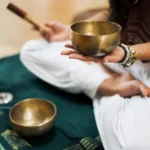
Sound is a big part of this journey. The Chakra Balancing and Nadi Cleansing session takes place in our dedicated Sound Healing Room, where Tibetan singing bowls and bells are placed close to the body so the vibrations can help you settle. You can read more on our wellness services page.
Frequently Asked Questions
How do I know if my nervous system needs a reset?
Common signs are feeling wired but tired, poor sleep, irritability, tension in the body, and rest that does not refresh you. Only a health professional can assess you, but if this sounds familiar, a reset is worth considering.
Will I feel better after only five days?
Many guests feel noticeably calmer by the end of the stay, but results vary, and a retreat is a start, not a cure. Before you leave, we help you pick a few small habits to take home, such as a short breathing practice or a daily phone-free window.
Do I have to give up my phone for the whole retreat?
No. There are three guided phone-free windows of four hours each, on Days 2, 3 and 4. Outside those windows, your phone is yours.
Do I have to do the fasting detox?
No. It is optional. You can choose our organic wellness cuisine instead, and our chef can cater to vegetarian, vegan, gluten-free and other diets.
I have never done yoga or meditation. Is that okay?
Yes. Yin Yoga and Yoga Nidra are among the gentlest practices there are, and every session is guided. Every practice is an invitation, never a requirement, and no experience is needed.
Can I join with a partner or friend?
Yes. The retreat can be booked for a single guest or for two people sharing a room. Current rates for both are on the retreat page.
Is there anything I cannot take part in?
The purification ceremony takes place on holy temple grounds. Out of respect for Balinese custom, women who are menstruating cannot join temple purification rituals. Our team can adjust your schedule if your dates overlap.
Is this a replacement for therapy or medication?
No. A reset retreat can sit alongside therapy or medication, but it does not replace professional care, especially if you are in crisis. If you are struggling, please speak to a health professional first.
|
If this sounds like you, read the Nervous System Reset Retreat page for the full itinerary. Then reach out to us for a free 30-minute consultation. Tell us how you have been feeling, and we will help you work out whether a reset is the right first step, or whether another pathway would suit you better. |