
Key takeaways
- I personally guide the hands-on sound healing sessions at The Bodhi Leaf, in our dedicated Sound Healing Room.
- My work draws on more than 15 years in Bali’s wellness industry, formal sound healing training in Indonesia and Nepal, and Polyvagal Theory training through the Polyvagal Institute.
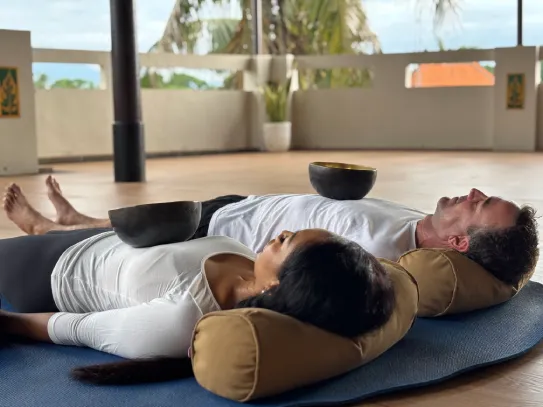
- Hands-on means the singing bowls and bells come close to your body, so you feel the vibration as well as hear it.
- Sound healing is a relaxation practice, not a medical treatment.
When you book a retreat, you are not only booking a room and a schedule. You are trusting the people who will be with you in some of your most tired, open and tender moments.
I think it is fair to want to know who that person is before you arrive. Where did they learn their craft? How do they work? Will they notice when you need less, not more?
So let me introduce myself, and share how I guide sound healing at The Bodhi Leaf.
- Who Am I, and Why Do I Do This Work?
- What Training Do I Bring to Sound Healing?
- What Does Hands-On Sound Healing Mean?
- What Does a Session With Me Feel Like?
- What Does the Research Say About Sound Healing?
- How Do I Shape Each Session?
- How Should You Prepare for a Session?
- Why Does Who Guides You Matter?
- How Can You Book a Session With Me?
- Frequently Asked Questions
- Will you lead my session yourself?
- What does hands-on mean? Will I be touched?
- I am skeptical about sound healing. Can I still try it?
- What if I fall asleep or cry?
- Is sound healing safe if I am pregnant or have a health condition?
- Is sound healing a replacement for medical care?
- How long have you been doing this work?
Who Am I, and Why Do I Do This Work?
My name is Putu Maryam Rachman. I founded The Bodhi Leaf and our sister retreat, Floating Leaf, here in Sukawati, Bali, and I have been working in Bali’s wellness industry for more than 15 years.
My roots trace back to the Balinese Royal Family of Karangasem. I grew up with traditional dance, healing arts and ceremony as part of everyday life. That upbringing is why so many of our retreats include temple visits, offerings and ceremonies. These are not activities I book for guests. They are part of the life I was raised in, and I love to share them.
Before coming home to Bali, I owned and managed a spa in central California. Those years taught me what good care looks like from the guest’s side: comfort, attention to detail and a team that truly listens. Today I bring that together with the healing traditions I grew up with.
What ties all of this together is a simple aim. I want to help each guest slow down, reconnect with themselves and find a greater sense of balance. Sound has become one of the most gentle and powerful ways I know to do that.
What Training Do I Bring to Sound Healing?
Tradition matters to me, but so does proper training. My certifications include:
- Yoga for Healing Therapy and Sound Healing, from the Indonesian Life Skill Academy.
- Sound Healing Therapy Course at Sound of Himalaya Retreat in Nepal, part of the global Project Sound for Peace.
- The Polyvagal Certificate Course: Safety, Connection and the Human Experience, through the Polyvagal Institute, co-founded by Dr. Stephen Porges, who developed Polyvagal Theory.
The Polyvagal training changed how I work more than anything else. Polyvagal Theory looks at how the nervous system reads safety and danger, and how feeling safe with another person helps the body settle. It taught me that before any healing can happen, your body needs to feel safe in the room. So in every session, safety comes first.
These trainings shape the experiences I create at The Bodhi Leaf, from our Nervous System Reset Retreat and Tibetan singing bowl sessions to our Silent Meditation Retreat.
What Does Hands-On Sound Healing Mean?
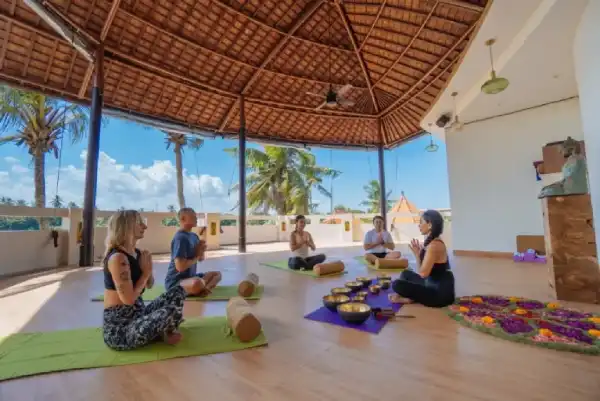
Sound healing is a relaxation practice that uses instruments such as Tibetan singing bowls and bells. You lie down, close your eyes and let sound and vibration fill the room. There is nothing to do and nothing to get right.
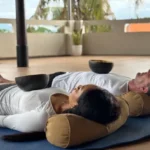
Many sound baths are played from across the room for a large group. I work differently. In my sessions, the singing bowls and bells are placed close to your body, near the chakra points, and then struck. This way you feel the vibration moving through your body, not only hear it. Because I am right beside you, I can also see how your body responds and adjust as we go.
Every session takes place in our dedicated Sound Healing Room, a quiet space set aside only for this work. In our Chakra Balancing and Nadi Cleansing session, I use these vibrations to help calm the nervous system and restore a natural sense of flow.
I always say this clearly: sound healing is a wellness practice, not a medical treatment.
What Does a Session With Me Feel Like?
We begin with a short check-in. I ask how you are feeling and whether there is anything you would rather avoid. Then you settle onto the mat with cushions and a blanket, close your eyes, and I begin.
Most people feel heavy and warm within a few minutes. Some notice the vibration in their chest, hands or feet. Some drift off to sleep. Some feel a wave of emotion and cry, often without knowing exactly why. All of this is normal. None of it means something has gone wrong.
When the session ends, there is no rush. You lie quietly for a few minutes, sip some water, and come back to the room in your own time. Many guests tell me they sleep more deeply that night.
I am always touched when guests write about it afterwards. In reviews on TripAdvisor, past visitors describe the Tibetan bowl sound bath as one of the best parts of their stay, and one guest wrote that a Balinese sound bath stayed with them long after they went home.
What Does the Research Say About Sound Healing?
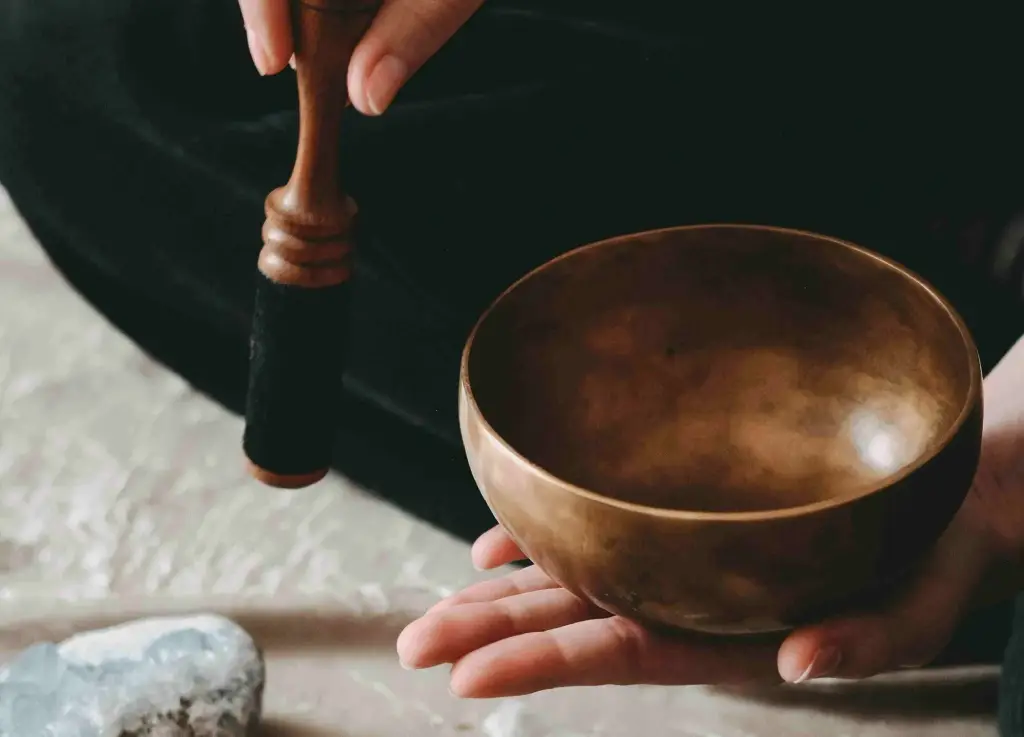
Research on sound healing is still young, so I like to keep my claims modest. Still, the early studies are encouraging.
An observational study of 62 adults, published in the Journal of Evidence-Based Complementary & Alternative Medicine, looked at a single Tibetan singing bowl meditation. After the session, participants reported significantly less tension, anger, fatigue and depressed mood. People who had never tried this kind of meditation before saw the biggest drop in tension.
I find that last part reassuring for first-timers. You do not need practice or belief for sound to help you relax.
I also want to be honest about the limits. These studies measure how people feel over a short time, without a comparison group. Sound healing can be a beautiful way to rest and reset. It is not a cure for any condition.
How Do I Shape Each Session?
No two sessions I guide are the same. Because of my Polyvagal training, I watch for signs that your body feels safe and settled. If you seem tense, I slow down. If the sound feels like too much, I soften it or move the instruments further away. If you need a pause, we pause. I follow your body, not a fixed script.
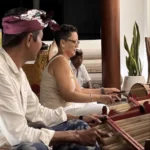
My Balinese roots are in the room too. In Bali, sound, offerings and ceremony are woven through daily life, and I bring that same sense of care and ritual to every session.
Personalization starts before you even arrive. Every retreat at The Bodhi Leaf can be customized to your physical and emotional needs, diet, timeframe and goals. Most bookings begin with a free 30-minute consultation in my own calendar. I use that time to hear what you are carrying and what you hope to feel, so I can shape your sessions around you.
How Should You Prepare for a Session?
You do not need to do much, but a few small things help:
- Eat lightly. A heavy meal right before can make it harder to settle. A light snack an hour or so before is ideal.
Wear something loose. Comfortable clothes let you breathe freely while lying down. - Arrive a few minutes early. Rushing in from a busy morning keeps your body in its stress gear. A few quiet minutes before we start make a real difference.
- Tell me anything relevant. If you are pregnant, sensitive to loud sounds, or have a health condition, let me know before we begin.
- Leave expectations at the door. Some sessions feel profound. Others just feel like a good rest. Both are worth having.
Afterwards, give yourself some space. Drink water, try not to jump straight onto your phone, and if you can, keep the next hour quiet. This is often when the calm from the session settles in. If sound helps you, you can bring a little of it home: a few minutes of quiet listening, or slow breathing with long exhales, can remind your body of the state it found with me.
Why Does Who Guides You Matter?
A good guide reads the room. They notice when you need more quiet, less intensity or simply a pause. That attention is hard to fake and easy to feel.
This matters even more in sound healing, where you are lying still with your eyes closed and your guard down. You deserve someone experienced, trained and calm beside you. Wherever you go for sound healing, I encourage you to ask who will guide your session before you book.
You can meet the rest of our healers, hosts and therapists on our crew page.
How Can You Book a Session With Me?
There are a few ways to experience sound healing with me at The Bodhi Leaf:
- As part of a retreat. The Nervous System Reset Retreat includes Chakra Balancing and Nadi Cleansing with Tibetan sound healing. The Mother-Daughter Retreat includes a session you share side by side. A Personal Healing retreat can be shaped around sound work.
- As a single session. Sound healing is also one of our wellness services, so you can book it on its own during your stay.
The easiest way to start is a free 30-minute consultation with me, which you can book on Calendly. You can also reach our concierge at concierge@thebodhileafwellness.com or on WhatsApp at +62 811 380202.
Hands-on work tends to suit a private setting, where the session can follow your pace. If you are weighing a private or group stay, our post on one-on-one retreats vs. group programs may help.
Frequently Asked Questions
Will you lead my session yourself?
Yes. I personally guide the hands-on sound healing sessions at The Bodhi Leaf. Let our team know your preferred dates during your consultation, and we will schedule your session around your stay.
What does hands-on mean? Will I be touched?
Hands-on means I place the singing bowls and bells close to your body, so you feel the vibration as well as hear it. I always ask you first. If you would prefer the instruments to stay further away, just tell me, and you can say no to anything at any point.
I am skeptical about sound healing. Can I still try it?
Of course. You do not need to believe in anything. Treat it as a quiet hour lying down and see how your body responds. People new to singing bowl meditation often notice the biggest drop in tension.
What if I fall asleep or cry?
Both are common and completely welcome. There is nothing to perform and no right way to experience a session.
Is sound healing safe if I am pregnant or have a health condition?
Please tell me before you book. If you are pregnant, have a medical device, or have a health condition, check with your doctor first, so I can adapt the session or suggest an alternative.
Is sound healing a replacement for medical care?
No. It is a wellness practice, not a medical treatment. It can sit alongside therapy or medical care, but it does not replace them.
How long have you been doing this work?
I have been working in Bali’s wellness industry for more than 15 years, and before that I owned and managed a spa in central California.
|
If you would like to experience this for yourself, read about the Bodhi Leaf approach and browse our wellness services. Then book a free 30-minute consultation with me or reach out to our team. Tell me what you are hoping for, and I will help you find the right way to experience sound healing, whether as a single session or as part of a longer stay. I look forward to welcoming you to the Sound Healing Room. |